

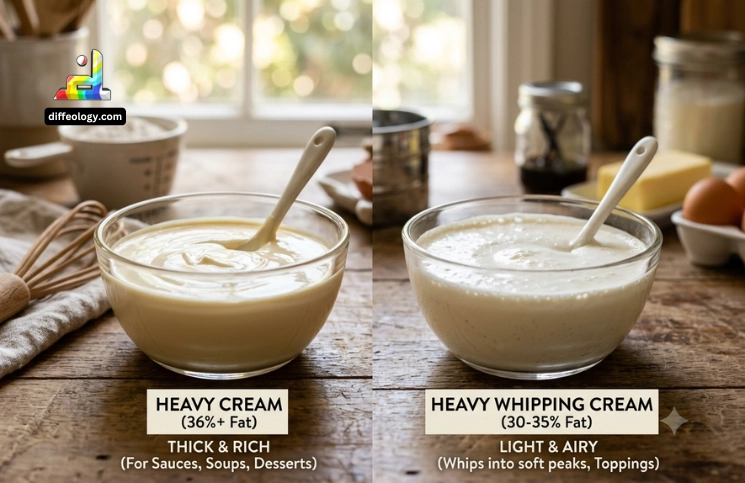
Difference Between Heavy Cream and Heavy Whipping Cream is simple. It’s primarily a matter of the fat content on the label. Heavy cream and heavy whipping cream are interchangeable in the United States. They are both a minimum of 36% milkfat. The cream thickens and becomes rich and good for whipping because of this fat.
The actual confusion is with whipped cream or light whipping cream. Typically, that type has 30%–36% milkfat, meaning it is lighter. Heavy cream works well with thick sauces, creamy soups, pasta, coffee, ganache, ice cream and firm whipped cream. Light whipping cream is suited for soft tops. To get the best, look at the fat line as you make your purchase.
Main Difference Between Heavy Cream and Heavy Whipping Cream
Heavy cream and heavy whipping cream are basically the same, except the latter must have a minimum of 36% milkfat. Heavy whipping cream doesn’t have to be used for whipping! It can also be used in sauces, soups, coffee and desserts.
Heavy Cream Vs. Heavy Whipping Cream
What is Heavy Cream?
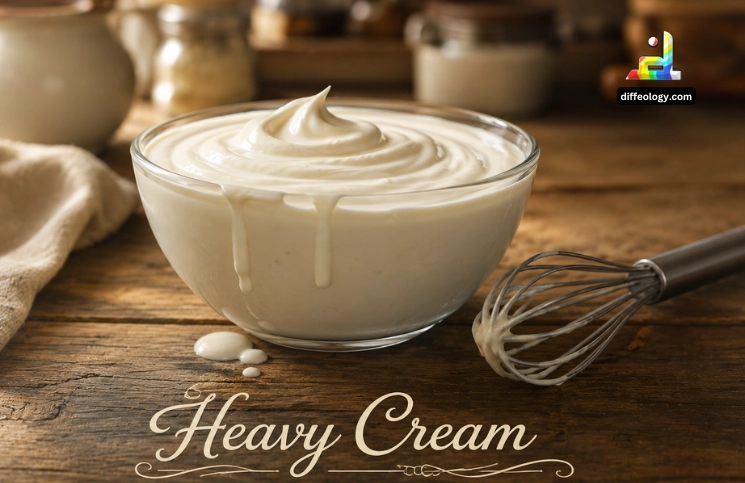
It is the thickest part of milk, which is separated from milk by centrifugal force. This will cause the milk to spin quickly and allow the cream to float to the top and be removed. The cream is then pasteurized or ultra-pasteurized to make it safer. Homogenization is sometimes used by brands as well to guarantee the cream stays smooth.
It has a minimum of 36% milkfat. A small amount of milkfat (about 38% or 40%) may be added to some companies. This provides a creaminess thicker than milk, half-and-half, or light cream. Heavy cream contains approximately 50-51 calories per 1 tablespoon. Per tablespoon, it also has around 5.4g of fat. Every 100 g of heavy whipping cream has around 340 calories and 36.1 g of fat. It’s delicious and just a little bit of it will make your meal creamy and delicious.
Read Also: Difference Between Heavy Cream and Thickened Cream
- Milkfat: at least 36%
- Calories: about 50–51 per 1 tablespoon
- Fat: about 4 g per 1 tablespoon
- Best for: pasta sauce, soup, coffee, ganache, ice cream, cakes, and whipped cream
- Texture: thick and smooth
- Technologies used: centrifugal separation, pasteurization, ultra-pasteurization, homogenization, and cold-chain refrigeration
- Storage: keep at or below 40°F
- Opened carton: use within about 10 days when stored well
What Is Whipping Cream?
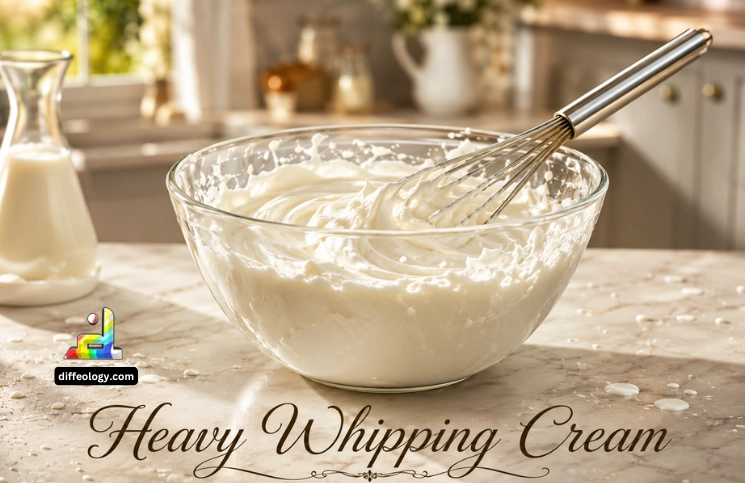
Whipping cream is cream that has the ability to retain air when beaten. That’s why it becomes soft-topping. Light whipping cream is usually sold at a milkfat content of 30%–36%. It’s not as thick as heavy cream. Still whips, but the peaks are softer. This makes it possible that it will not remain firm for a long time. Light whipping cream is suitable for use with fruit, pies, pancakes, hot chocolate and light desserts. It can also be added to some sauces, which might make the sauce thinner.
Read Also: Difference Between Full Cream Milk and Whole Milk
- Milkfat: usually 30%–36%
- Calories: about 43–44 per 1 tablespoon
- Fat: about 6 g per 1 tablespoon
- Best for: soft cream topping, pies, fruit, drinks, and light desserts
- Texture: lighter than heavy cream
- Whipping result: soft peaks
- Technologies used: centrifugal separation, pasteurization, ultra-pasteurization, homogenization, and cold-chain refrigeration
Comparison Table “Heavy Cream Vs. Heavy Whipping Cream “
| Milkfat | At least 36% | At least 36% | Often the same product |
| Light whipping cream | Higher fat | Higher fat | Light whipping cream has 30%–36% |
| Calories | About 50–51 per 1 tablespoon | About 50–51 per 1 tablespoon | Almost the same |
| Fat | About 5.4 g per 1 tablespoon | About 5.4 g per 1 tablespoon | Rich and thick |
| Whipping | Firm peaks | Firm peaks | Good for cakes |
| Sauce use | Thick sauce | Thick sauce | Good for pasta |
| Taste | Rich | Rich | Full dairy taste |
| Texture | Thick | Thick | Smooth feel |
| Best use | Cooking and desserts | Cooking and desserts | Both work well |
| Storage | At or below 40°F | At or below 40°F | Keep cold |
Difference Between Heavy Cream and Heavy Whipping Cream in Detail
Get to know the Heavy Cream Vs. Heavy Whipping Cream in Detail.
Label Meaning
In U.S. food regulations, heavy cream and heavy whipping cream may refer to the same. Cream containing at least 36% milkfat can be called heavy cream or heavy whipping cream. Hence, both can be used in the same recipes.
The term ‘whipping’ can be a misinterpretation for consumers. Heavy whipping cream isn’t just for whipped cream. It can also be used in pasta, soups and coffee, baked goods, frosting, and sauces. The name is not what is important; it is the fat level.
Milkfat Level
Heavy cream is made with a minimum of 36% milkfat. Some cartons may contain slightly more, as much as 38% or 40%. The thicker the cream, the more fat is present. It also provides a better flavour and a silky texture.
Light whipping cream has a reduced fat content. It often has 30%–36% milkfat. This small modification may have an impact on the final food. Using a lighter cream can give the sauce a thinner consistency and make whipped cream less firm.
Whipping Power
Heavy cream and heavy whipping cream will whip well because of the fat that holds air. This results in hard peaks. For cakes, pies, trifles and desserts that require firm peaks, use a star tamper, a star tip, or a star tube.
Light whipping cream will also whip, but produces lighter peaks. It’s best served when the topping is served first. Heavy cream will work better for piping or cake topping.
Cooking Use
Heavy cream is used in hot food and is strong. It is a good addition to soups, pasta sauce, curry, mashed potatoes and baked dishes. It adds richness to food without the need for much.
Heavy whipping cream is used in the same manner. Place on the stove and cook at a low or medium temperature. Overheating may affect the texture. Gentle heat maintains a smooth and rich sauce.
Storage and Safety
Cream should be kept cold. It is safe from the store to the home fridge with cold-chain refrigeration. Store cream at 40° F or below.
Heavy cream that has been opened should be used within about 10 days. It can also be frozen for approximately 3-4 months at 0°F and may change in texture following thawing.
Calories and Fat
Heavy cream (heavy whipping cream is also high fat) is high in calories. The calorie and fat contents of 1 tablespoon are approximately 50-51 calories and 5.4 grams of fat. So, it’s nice to offer little portions.
Light whipping cream isn’t as rich a dairy product, but it has some. There are approximately 43–44 calories and 4.6 g of fat per 1 tablespoon. It may seem small, but in larger recipes it will be more apparent.
Taste and Texture
Heavy cream has a creamy and smooth flavor. It makes coffee thicker, soup thicker and softens the mouth during the eating of dessert. When it comes to seafood, a little goes a long way.
Light whipping cream tastes creamy, too, but is lighter. A better result when a soft finish is needed in the recipe. Heavy cream is best used when a rich consistency and flavor is desired.
Key Difference Between Heavy Cream and Heavy Whipping Cream
Here are the key points showing the Difference Between Heavy Cream Vs. Heavy Whipping Cream.
- Fat is the main point: Heavy cream contains at least 36% milkfat. About 30% to 36% of light whipping cream consists of fat.
- Whipped cream results in strong peaks thanks to heavy cream. Cream that has been lightly whipped creates gentle peaks.
- Sauce consistency: Heavy cream improves the richness and thickness of sauces.
- Heavy whipping cream is better for cakes, pies, ganache, and firm toppings.
- Using a small amount of whipped cream is preferable for soft dessert toppings on drinks and fruit.
- Flavor: Because heavy cream has more fat, it tastes stronger.
- Texture: Heavy cream seems smooth and thick.
- Calories: One tablespoon of heavy cream contains around 50–51 calories.
- Heavy cream has about 5.4 grams of fat per tablespoon.
- A lighter choice: One tablespoon of light whipping cream has about 43–44 calories.
- Most recipes let you swap heavy cream for heavy whipping cream.
- Label check: For thick results, seek 36% milkfat or more.
FAQs: Heavy Cream Vs. Heavy Whipping Cream
Conclusion
Difference Between Heavy Cream and Heavy Whipping Cream is simple. To make thick whipped cream, creamy spaghetti, rich soup, ganache, and ice cream, pick cream that has at least 36% milk fat. Soft toppings may be adequately made with light whipping cream.

