

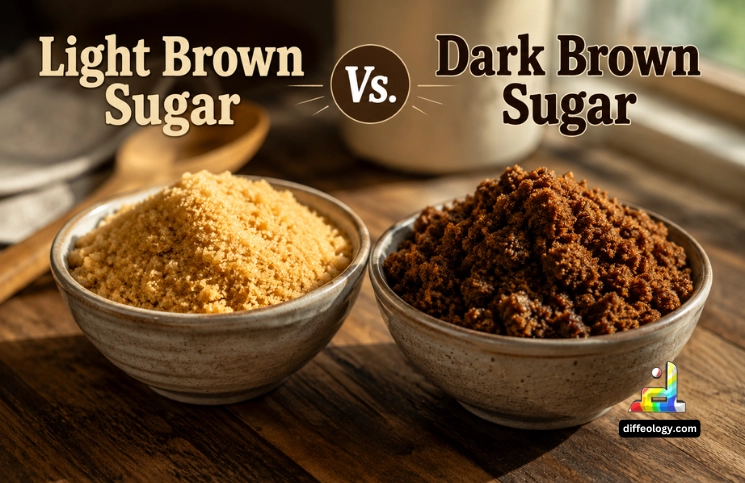
Difference Between Light and Dark Brown Sugar boils down to its molasses. Molasses is a thick syrup that produces a brownish shade to both the sugar you make brown sugar from (and its associated qualities), as well as serving as another ingredient used to produce the syrup itself. Light brown sugar contains around 3.5% by weight of molasses compared to granulated sugar during production; therefore, dark brown sugar has 6.5% by weight of molasses compared to granulated sugar during production; thus, light brown sugar contains 2 times less than does dark brown sugar; this explains why dark has more of a “dark hue” and “wet feel”; they also provide different flavors.
The total softness and delicacy of taste of processed brown sugars are derived largely from their respective cultured or refined sugars. Dark, on the other hand, has much richer and more pronounced flavours of caramel, toffee, molasses, etc.
What Is The Main Difference Between Light and Dark Brown Sugar?
The main difference is the amount of molasses used in the refining process. Light brown sugar contains approximately 3.5%, which gives it a mild, toffee sweet taste and color. Dark brown sugar includes twice, approximately 6.5%, the amount of molasses and has an intensified, strong toffee flavour and dark hue. The variations for the taste, depending on how much molasses is used, are noted when cooking the two and substituting one for the other.
Light Brown Sugar Vs. Dark Brown Sugar
What Is Light Brown Sugar?
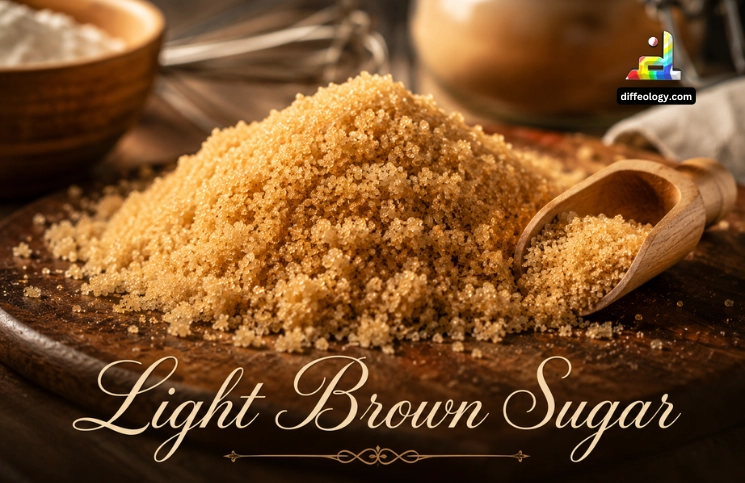
Light brown sugar is made by mixing together white sugar (clear, etc.) and molasses in equal amounts. Light brown sugar has the lightest characteristics for flavor, aroma, and color; it has a light flavor profile (somewhat between caramel and toffee), and it appears to be a light golden brown.
Light brown sugar is good for food items such as cookies, cakes, muffins, banana bread, cinnamon rolls and simple sauces. As the sugar contains molasses, it helps produce moister and softer baked goods as well as adding the resulting chewiness, for example, biscuits. It is an added sugar that should be consumed in moderation, on occasion.
Read Also: Difference Between Latte and Cappuccino
- Approximate molasses content: 3.5%
- Color: Golden brown
- Taste profile: Mild, sweet and delicate
- Typical use: General baking, cookies, cakes, muffins, banana bread
- Characteristics: Adds moisture, contributes to a soft texture.
What Is Dark Brown Sugar?
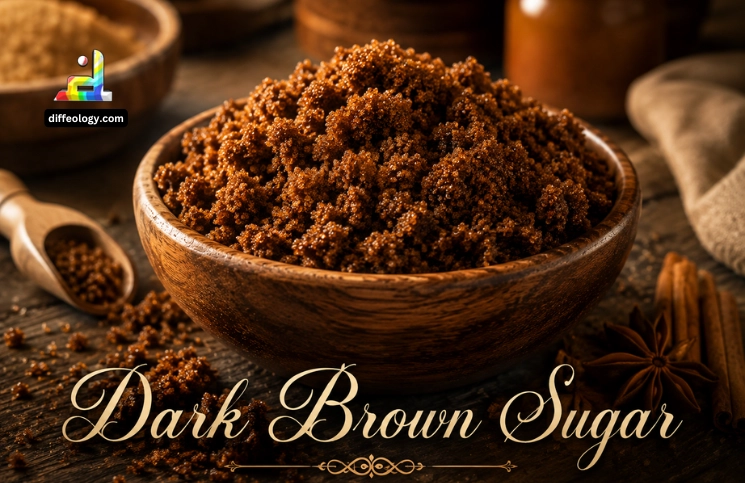
In comparison to light brown sugar, dark brown sugar is created by adding sufficient quantity of molasses (approximately 6.5 percent) to standard sugar thereby creating a rich, dark brown hue and enhanced richness and moisture as well as depth of flavor.
As a result, dark brown sugar is more concentrated in terms of flavor and has much richer overtones than any other type of sugar; its flavor will remind you of caramel, molasses and toffee.
Dark brown sugar works exceptionally well in highly flavored recipes because of the amount of moisture it contains; therefore, it will create a darker colored product and any dish made with dark brown sugar will have an invitingly intense aroma.
Read Also: Difference Between Jam and Jelly
- Approximate molasses content: 6.5%
- Color: Dark brown
- Taste profile: Complex, intense and rich
- Typical use: Gingerbread, spice cake, baked beans, barbecue sauce, marinades
- Characteristics: Adds ample moisture, imparts dark color and robust aroma.
Comparison Table “Light Vs. Dark Brown Sugar”
| Molasses | About 3.5% | About 6.5% |
| Color | Light brown | Deep brown |
| Taste | Mild caramel | Strong caramel and molasses |
| Moisture | Soft and moist | A bit more moist |
| Best baking use | Cookies, muffins, cakes | Gingerbread, spice cake |
| Best cooking use | Light sauces | BBQ sauce, baked beans |
| Calories | About 380 per 100 grams | About 380 per 100 grams |
| Carbs | About 98 grams per 100 grams | About 98 grams per 100 grams |
| Swap amount | 1:1 | 1:1 |
| Health note | Added sugar | Added sugar |
Difference Between Light and Dark Brown Sugar in Detail
Get to know the Light Brown Sugar Vs. Dark Brown Sugar in Detail.
Molasses Level:
Light brown sugar supplies approximately 3.5% and dark brown 6.5% molasses, which provides the distinctive soft brown hue and caramel-like flavoring. Dark brown sugar contains a higher level and the taste it imparts is more powerful.
Taste:
In a mild manner, light brown sugar supplies a gentle caramel flavor, which is undetectable with the addition of beaten butter, vanilla, chocolate, the addition of fruits or nuts. Dark brown sugar produces a smell that is much more robust and combines earthy, licorice tones with the stronger, but familiar caramel flavor.
Color:
The light brown color of this sugar can be used in cakes and light biscuits, whereas dark brown sugar lends itself well to gingerbread cookies, ginger bread, and baked beans.
Moisture:
owing to the presence of the molasses, both products will contribute to a moister and tastier finished article. Think sticky rather than crispy cookies. The stronger the flavor, the moister the final item.
Baking Application:
Light brown sugar is ideal for use in many traditional baked goods, such as cookies and cakes. Examples include cookies, blondie bars, pancakes, banana bread and muffins. However, dark brown sugar is appropriate for use in items that are baked with and exemplify unique seasonal flavors, such as gingerbread, ginger-molasses cookies, pecan-molasses cookies, sticky buns, etc.
Nutrition:
Molar content of both brown sugar types is very similar. A standard 100 gram portion of either contains approximately 98 grams of carbohydrate and 380 kilocalories, of which nearly everything is calorific. Considering the minimal extra minerals present, this difference can be ignored.
Recipe Substitution:
Although in most cases, the product can be readily swapped 1:1 if using the alternate product, the flavor of the proportion will be more dominant. Use more dark brown sugar if a strong taste is sought and less for a mild one.
Key Difference Between Light and Dark Brown Sugar
Here are the key points showing the Difference Between Light Brown Sugar Vs. Dark Brown Sugar.
Molasses Content
Light brown sugar contains 3.5%.
Dark brown sugar 6.5%.
Taste
Light brown sugar mild, light.
Dark brown sugar is deep, rich, and bolder.
Color
Light brown
Darker in nature
Best used in
Cookies
Gingerbread cookies
Best used in
Light sauces
Barbecue sauces, Baked beans
Calories
Approximately 380 per 100 grams.
Approximately 380 per 100 grams.
Carbohydrate
Approximately 98 grams per 100 grams.
Approximately 98 grams per 100 grams.
FAQs: Light Brown Sugar Vs. Dark Brown Sugar
Conclusion
Difference Between Light and Dark Brown Sugar is easily depictable. Although it is still possible to produce a successful bake, the taste of the finished food will be less intense, whereas the mole based taste of the main element may be more explosive. As both have molasses, this impacts the taste and appearance of the final product and yields a moisture content of 6.5% for dark and 3.5% for light. The taste and coloration also differ from each other and weight when used in baking. The choice is also based on the taste preference, either mild or robust.

