

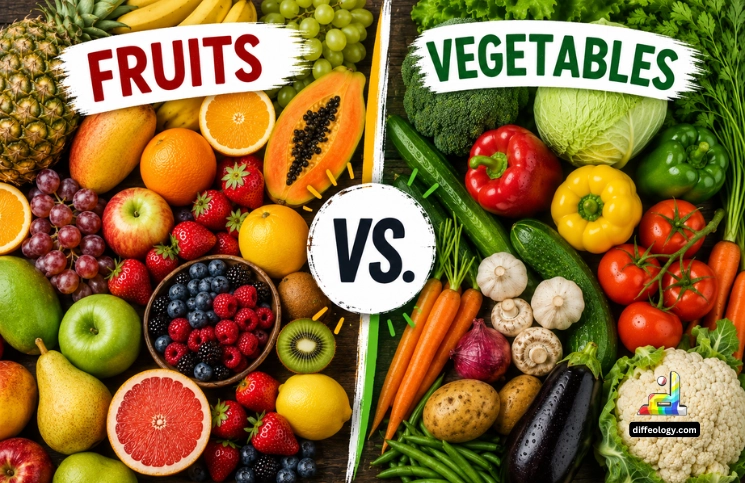
Difference Between Fruits and Vegetables means how fruits and vegetables are different in plant science and food use. From a bloom on a plant comes what botanists name a fruit, usually holding seeds inside.
Guides such as WHO Nutrition Guidance, CDC Nutrition Data, USDA MyPlate, FDA Nutrition Facts Label, plus Food Composition Databases bring clarity about what they offer when eaten. Folks who follow health rules might know the WHO pushes for over 400 grams of produce daily. Yet CDC numbers show just a sliver – 12.3 percent – hit the mark on fruit. When it comes to veggies, even fewer make it, sitting at only 10.0 percent.
Main Difference Between Fruits and Vegetables
Born from flowers, fruits typically carry seeds inside them. Roots, leaves, or even stems might turn into what we call vegetables. Sweetness or a sharp tang tends to mark the flavor of fruits. On the flip side, vegetables lean toward earthy notes or a slightly bitter edge. What sets them apart mainly? It’s where on the plant they show up. Bite-sized treats often feature fruit. On the plate at dinner, veggies usually show up too.
Fruits Vs. Vegetables
What are Fruits?
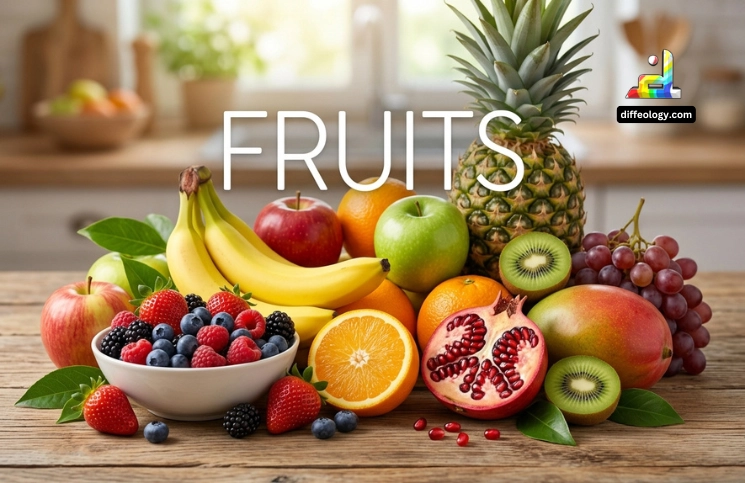
From flowers on plants come what we call fruits. Inside – or sometimes out – seeds hide within most of these sweet parts. Apple, banana, orange, mango, grape, berry, peach, pear, and melon show up often in meals. Tomato, cucumber, pepper, pumpkin, eggplant, okra? Not veggies by science rules.
Water flows through them, along with fiber, vitamin C, potassium, helpful compounds from green life, plus sugars made by nature. Fiber stays intact when you eat an apple instead of sipping its liquid form. According to USDA MyPlate, a full cup of fresh fruit, the same amount of pure fruit juice, or just half a cup of dried pieces all equal one serving from the fruit category.
Read Also: Difference Between Blood Orange and Grapefruit
- Fruits usually grow from flowers.
- Most fruits have seeds.
- Fruits often taste sweet, juicy, or sour.
- Whole fruits have more fiber than juice.
- Examples include apple, banana, orange, mango, grape, berry, and melon.
What are Vegetables?
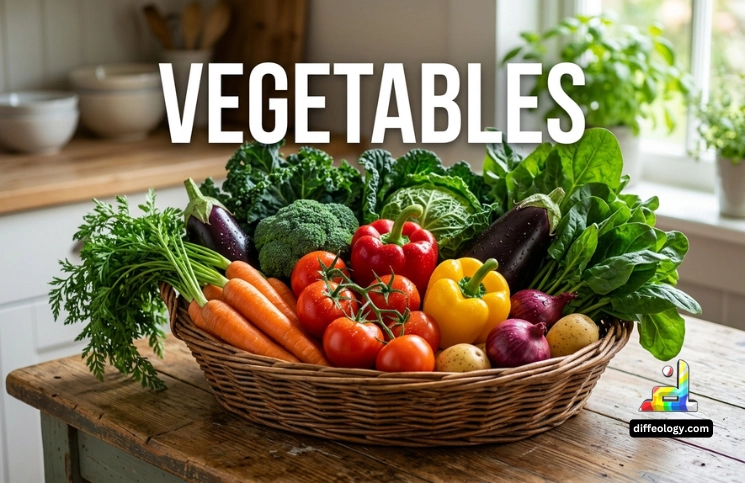
Roots, leaves, stems – these belong to plants we eat. Some grow underground; others reach for light. A carrot hides below the soil, storing energy. Above ground, spinach catches the sun with broad surfaces. The stalk of celery carries water upward. Tiny buds make up broccoli, clustered tight. Onions pack layers in round forms. Potatoes swell in darkness beneath dirt paths. Meals brighten when these appear on plates. Fiber comes along, plus earthy flavors. Nutrients arrive without a loud announcement.
Less sweetness shows here compared to fruit bowls. Starch shows up in higher amounts inside potatoes, corn, peas, and sweet potatoes. Five categories make up the vegetable section on USDA MyPlate – dark green comes first, then red and orange join next, followed by beans, plus their cousins peas and lentils; after those appear starchy ones, leaving room for everything else too. What counts as a single cup? A full cup of veggies does, just like veggie juice poured to the same line, even two cups of uncooked leafy types add up equal.
Read Also: Difference Between Sweet Potatoes and Yams
- Vegetables can come from many plant parts.
- Vegetables are often used in cooked meals.
- Many vegetables give fiber, folate, vitamin A, vitamin C, and potassium.
- Examples include carrot, spinach, broccoli, onion, potato, cabbage, peas, and lettuce.
Comparison Table “Fruits Vs. Vegetables”
| Plant source | Flower part | Root, stem, leaf, flower, bulb, seed, or tuber |
| Seeds | Usually have seeds | Often no seeds in the eaten part |
| Taste | Sweet, juicy, or sour | Savory, mild, bitter, or earthy |
| Common use | Snacks, smoothies, desserts | Soups, salads, curries, sides |
| Examples | Apple, mango, orange, grape, tomato | Carrot, spinach, onion, broccoli, potato |
| Food guide count | 1 cup fruit or ½ cup dried fruit | 1 cup vegetables or 2 cups of leafy greens |
| Main value | Fiber, vitamin C, potassium | Fiber, folate, vitamin A, potassium |
Difference Between Fruits and Vegetables in Detail
Get to know the Fruits Vs. Vegetables in Detail.
1) Plant Part
Fruit begins its life where petals once bloomed. Once blossoms fade, small swellings take shape right behind them. These growths slowly become what we recognize as fruit. Inside each one, future plants wait quietly inside hard cases. What looks like a simple bite contains next season’s start.
From different parts of plants, we get vegetables. A carrot grows underground as a taproot. Leaves make up what we eat in lettuce. The part people consume in celery is actually its stalk. What looks like an onion is really a layered bulb. Inside the soil, potatoes develop as swollen stems called tubers.
2) Seeds
Freshness often hides inside fruit – apples carry tiny black dots at their core. Oranges pack juicy segments filled with specks that grow into trees. Grapes hold small hard bits near the middle. Papayas spill clusters of soft, shiny seeds when sliced open.
Watermelons stretch red flesh around scattered dark pearls waiting underground.
Folks munch on parts of plants that never carry seeds. Take spinach, carrot, onion, cabbage, potato – those stay classified as veggies. Despite missing reproductive bits inside what we consume.
3) Taste
Most fruits bring a mix of sweetness, juiciness, or sharpness to the tongue. That flavor shows up because they hold real sugar along with moisture inside.
Most veggies come off quiet – bland, sometimes sharp, a few even dirt-like on the tongue. When warmed through, their flavor wakes up, partly since warmth breaks down stiffness inside.
4) Kitchen Use
Fruit shows up in bowls, blended drinks, on top of yogurt, inside cakes, mixed into salads, or finished off in sweets. Some kinds get eaten just as they are.
Most times, veggies go into bowls of soup or land on top of rice. Cooking treats tomatoes as a veg, even if science says otherwise. Salads hold them, pasta mixes them in, curries simmer with their flavor too. Botanists call it a fruit, yet kitchens act like that does not matter at all.
5) Nutrition
Freshness comes from apples, oranges, berries – each packed with moisture plus roughage that helps digestion. What sticks around in whole pieces is the fibrous part, which machines often remove when juicing.
Fiber, folate, vitamins A and C, potassium, plus natural compounds come from vegetables. Different shades on your plate mean a broader mix of helpful elements inside.
6) Sugar and Starch
Some fruits pack a sweeter punch because they carry more of nature’s sugar compared to most veggies. Take mangoes, bananas, grapes – these feel sugary on the tongue thanks to that balance. Sweetness shows up strong on dates too, no surprise there.
Fewer sugars hide inside most veggies. Potatoes, corn, peas, plus sweet potatoes pack heavier carbs compared to greens that spread wide and thin.
7) Health Role
Fruit makes for an easy bite between meals. Picking a full piece might beat grabbing sugary treats, baked goods, or soda pop.
Bulk comes easier when veggies go on the plate. Fiber shows up along with bright hues and heft – yet sugar stays low. Eating each day might just shift a little closer to steady.
Key Difference Between Fruits and Vegetables
Here are the key points showing the Difference Between Fruits Vs. Vegitables.
- Origin: Fruits grow from flowers. Vegetables grow from roots, leaves, stems, flowers, bulbs, seeds, or tubers.
- Seeds: Fruits usually have seeds. Many vegetables have no seeds in the edible part.
- Taste: Fruits are often sweet or sour. Vegetables are often savory, mild, bitter, or earthy.
- Food Use: Fruits fit snacks and desserts. Vegetables fit meals and side dishes.
- Science Rule: Tomatoes and cucumbers are fruits in Botany because they grow from flowers.
- Cooking Rule: Tomatoes and cucumbers are vegetables in Culinary Classification because they are used in savory meals.
- Sugar: Fruits often have more natural sugar than many vegetables.
- Starch: Potatoes, corn, peas, and sweet potatoes have more starch than leafy greens.
- Fiber: Both fruits and vegetables can give fiber when eaten whole.
- Water: Many fruits and vegetables have high water content.
- Daily Amount: WHO Nutrition Guidance suggests more than 400 grams each day.
- Food Groups: USDA MyPlate keeps fruits and vegetables in separate groups.
- Vegetable Groups: USDA MyPlate lists 5 vegetable groups for better variety.
- Best Choice: Whole fruits and many colored vegetables are better than sugary drinks or fried foods.
FAQs: Fruits Vs. Vegetables
Conclusion
Difference Between Fruits and Vegetables is easy to learn when plant science and kitchen use are separate. Fruit begins as a bloom, then forms seeds inside. From roots up through leaves, even stems or flower parts, veggies appear in many shapes. Because they pack fiber, plus moisture and key nutrients, both add support to how we feel each day. Try filling plates with full pieces of fruit alongside bright, varied garden plants every single morning.
References & External Links
- Why the Fruit? Health & Wellness
- 11 Reasons to Eat Vegetables Every Day

