

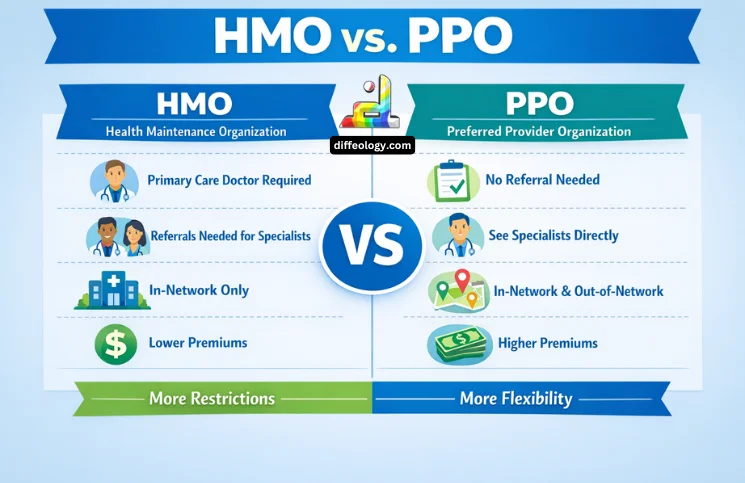
Difference Between HMO and PPO explains two common health plans in very simple words. An HMO asks a person to pick a main doctor who guides care and gives permission to see a specialist. This keeps monthly bills low. A PPO lets a person see many doctors without permission, even those outside the plan network, but monthly bills are higher. About 70% of people with employer health plans choose between these two types. The choice is mostly about money and freedom. HMOs save money by using a set group of doctors. PPOs give more freedom but cost more.
Main Difference Between HMO and PPO
The main difference is about who can be seen and how much must be paid. HMOs limit doctors to a network and require a main doctor to approve specialist visits. This makes costs lower. PPOs let a person see specialists directly and go outside the network, but this raises costs. HMOs suit people who want low monthly bills. PPOs suit people who want more choice and can pay more.
HMO Vs. PPO
What is HMO
An HMO is a health plan that keeps care inside a set group of doctors. A person picks a main doctor, often called a primary care doctor. That doctor treats most problems and gives permission to see a specialist. This system helps avoid extra tests and keeps costs steady. Many people choose HMOs to save money on monthly payments and on visits. Typical facts: network only for regular care, referral required for specialists, and lower premiums and copays.
- Network care only, except for emergencies.
- Referral required to see a specialist.
- Lower premiums and smaller copays.
Read Also: Difference Between Medicare and Medical
Many employer plans offer HMO options to control costs. An HMO uses tools that help doctors share patient notes and speed up approvals. These tools include Electronic Health Records EHR, Prior Authorization systems, and Provider Directories. These tools make it easier for the main doctor to see past tests and to send a referral. The result is fewer repeated tests and faster care inside the network.
How HMO helps
- Saves money on monthly bills.
- Makes care simple by using one main doctor.
- Encourages regular checkups to prevent big problems later.
What is PPO
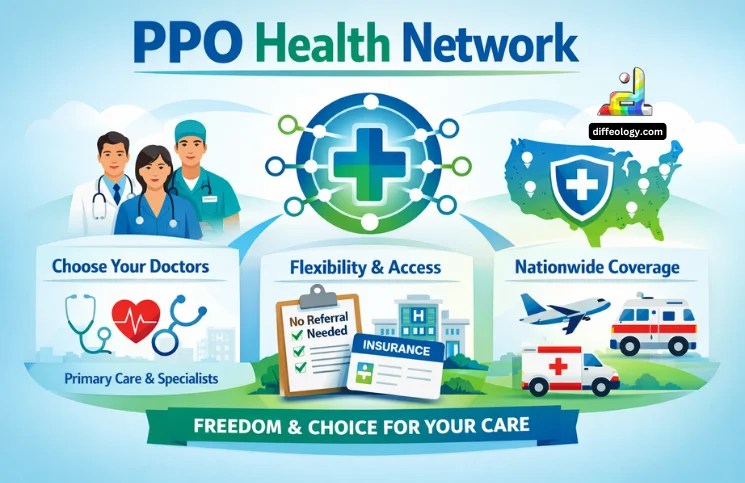
A PPO is a health plan that gives more freedom to pick doctors. No permission is needed to see a specialist. Folks might visit physicians beyond the plan’s list, though fees rise when they do. Monthly amounts usually climb with PPOs, just like personal spending if care adds up. Most experts? No note from a doctor required. Treatment outside the system gets some backup in payment terms. Bills tend to run high – both upfront charges and insurance gaps show bigger numbers.
- No referral needed for most specialists.
- Out‑of‑network care is partly covered at a higher cost.
- Higher premiums and higher out‑of‑pocket costs.
Read Also: Difference Between Accident and Incident
Good for people who travel or need many specialists. PPO plans use tools that help find doctors and handle bills. These tools include Claims Processing systems, Telemedicine platforms, and Provider Search Engines. These tools let a person find a doctor fast and pay bills online. PPOs give more choice but need more attention to bills and claims.
How Ppo supports:
- Offers more choice of hospitals and clinics.
- Allows visits to doctors outside the plan network.
- Covers part of out‑of‑network costs, so care is still affordable.
Comparison Table “HMO Vs. PPO”
| Premiums | Lower | Higher |
| Referrals | Required | Not required |
| Out‑of‑network | Limited | Partial coverage |
| Specialist access | Via the main doctor | Direct |
Difference Between HMO and PPO in Detail
Get to know the HMO Vs. PPO in Detail.
Network Rules
HMOs ask members to use doctors inside a set network. This keeps costs low. If a person goes outside the network for regular care, the plan may not pay. Emergencies are covered even if the doctor is outside the network. PPOs let members see doctors outside the network. The plan pays part of the cost for out‑of‑network care. This gives more freedom but raises costs.
Most folks do fine with HMOs if their favorite clinics are covered. When someone wants freedom to visit specialists outside the usual list, PPOs tend to help more. The choice comes down to looking up provider access and weighing extra fees for distant options.
Referrals and Approvals
HMOs usually need a referral from the primary doctor to see a specialist. This means the main doctor checks the problem first. Referrals help avoid extra tests and keep care organized. PPOs do not need referrals for most specialists. A person can book a specialist visit directly. This saves time but can cost more.
Some services in both plans may need prior approval. Tools like Prior Authorization systems help manage these approvals. These systems check if a test or treatment is needed before the plan pays.
Cost Structure and Bills
HMOs often have lower premiums and lower copays. This makes monthly costs easier to manage. PPOs often have higher premiums and higher deductibles. This means monthly bills are higher, but there is more choice of doctors.
A person who wants low monthly bills may pick an HMO. A person who wants more doctor choice may pick a PPO and pay more. It helps to compare the yearly cost of premiums plus likely visit costs.
Specialist Access and Speed
HMOs route specialist care through the main doctor. This can slow access, but keeps care coordinated. PPOs allow direct access to specialists. This can be faster for urgent specialist needs. For people with chronic conditions who see many specialists, PPOs may save time even if they cost more.
Both plans can offer fast care for real emergencies. For non‑emergency specialist needs, PPOs give faster direct access.
Out‑of‑Area and Travel Care
HMOs may limit care when a person is away from home. Some HMOs have rules for out‑of‑area care. PPOs usually cover care while traveling, even if the doctor is out of network. This makes PPOs better for people who travel often or live in more than one place.
Before travel, it helps to check how each plan covers care away from home. Some plans offer telemedicine for travel needs.
Paperwork and Claims
HMOs usually have less paperwork for members. The network handles most claims. PPOs may require members to file claims for out‑of‑network care. This adds time and effort. Tools like Claims Processing systems help with this work. For PPOs, keeping receipts and claim forms is important.
A person who wants less paperwork may prefer an HMO. A person who can handle claims may prefer a PPO for more choice.
Best Fit for Different People
HMOs fit people who want low costs and simple care. They work well for families and people with steady health needs. PPOs fit people who want more choice and can pay more. They work well for people who need many specialists or who travel a lot.
Choosing the right plan means looking at budget, health needs, and travel habits. Checking the network and the tools the plan uses helps make a good choice.
Key Difference Between HMO and PPO in Short Points
Here are the key points showing the Difference Between HMO Vs. PPO.
Premiums
- HMOs usually have lower monthly premiums. PPOs usually have higher monthly premiums. This affects the yearly cost.
Referrals
- HMOs require a referral from a primary doctor to see a specialist. PPOs do not require referrals for most specialists.
Network
- HMOs use a strict network of doctors. PPOs allow visits to doctors outside the network at a higher cost.
Out‑of‑network
- HMOs often do not pay for out‑of‑network care. PPOs pay part of out‑of‑network costs.
Copays
- HMOs often have small, fixed copays for visits. PPO copays can vary and may be higher.
Deductibles
- HMOs often have lower PPOs often have higher deductibles.
Specialist access
- HMOs route specialist care through the main doctor. PPOs allow direct specialist visits.
Paperwork
- HMOs have less paperwork for members. PPOs may need claim forms for out‑of‑network care.
Travel
- PPOs are better for people who travel. HMOs may limit care away from home.
Choice
- PPOs give more choice of doctors. HMOs give fewer choices but lower costs.
Preventive care
- HMOs focus on prevention and regular checkups. This can reduce long‑term costs.
Emergency care
- Both plans cover emergencies, but rules for follow‑up care may differ.
Employer plans
- Many employers offer both HMO and PPO options. Choice depends on budget and needs.
Best user
HMOs suit people on a tight budget. PPOs suit people who need more doctor choice.
FAQs: HMO Vs. PPO
Conclusion
The difference between HMO and PPO is simple. Money and choice shape it. With HMOs, prices stay smaller because one group of clinics gets used plus a lead doctor must approve visits. PPOs let you go further, seeing experts without referrals though the bill climbs. Pick what lines up with cash on hand, trips planned, and how regularly special treatment shows up in life.
References & External Links
- Understanding Health Maintenance Organizations (HMOs): Benefits and Drawbacks
- What is a PPO health plan?

