

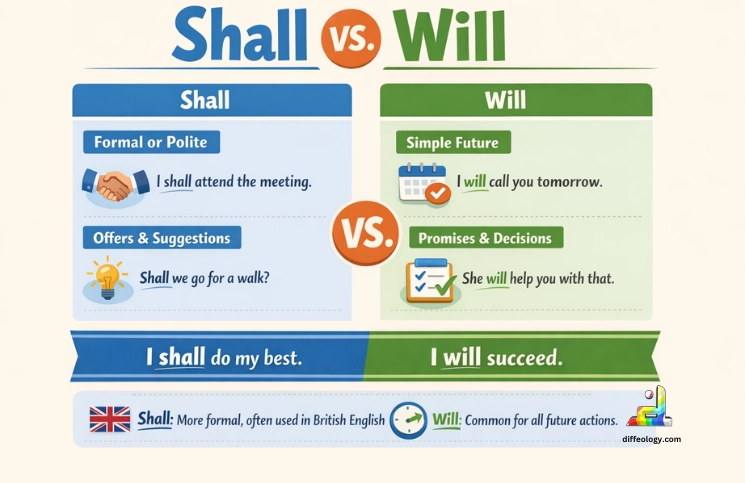
The difference between shall and will is about how we talk about the future and how polite or strong we sound. Shall often sounds more formal or polite and is used for offers or in old-style writing. Will is the normal word for future actions, promises, and decisions. Teachers and writers use tools like corpus analysis, language models, grammar checkers, style guides, text corpora, search engines, electronic dictionaries, spell checkers, and readability tools to study how people use these words today. Most people use will in everyday speech. Shall shows up in polite offers, formal writing, or legal texts.
Knowing the difference helps you speak and write in the right tone and avoid mistakes.
Main Difference Between Shall and Will
The main difference is tone and use. Shall sounds more formal or polite and is often used with I and we for offers or suggestions. Will is the usual word for future facts, promises, and strong intent and works with any subject. In modern English will is used far more. If you want to sound polite or very formal you might choose shall. If you want to be clear and natural in most situations you should use will.
Shall Vs. Will
What is Shall
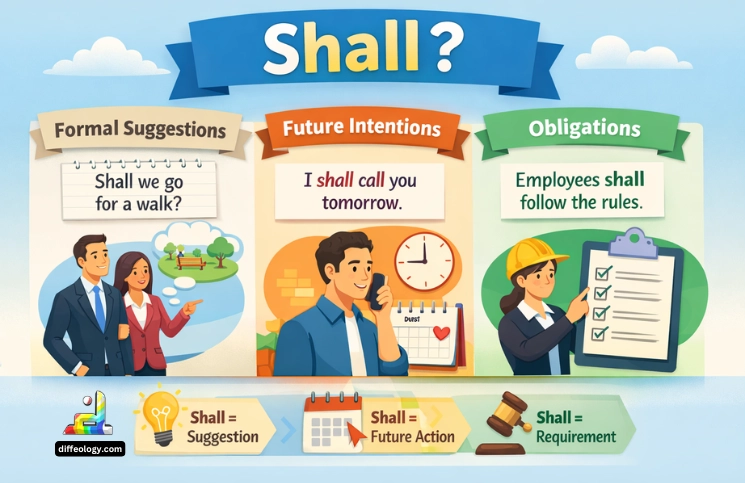
Shall is a helping verb that people once used a lot to talk about the future with I and we. You hear it in questions that offer help or make a suggestion. For example, people say Shall we go to ask if others want to go. In this use shall sound polite and friendly. In older books and formal writing shall also appear to state rules or duties.
Read Also: Difference Between Need and Want
In legal and technical writing it sometimes means that something must happen. Because this can be confusing, many writers now use must or will instead of shall to show obligation. In everyday speech shall is rare and can sound old-fashioned. Teachers often tell students to use will unless they need a very formal tone or a polite offer.
What is Will
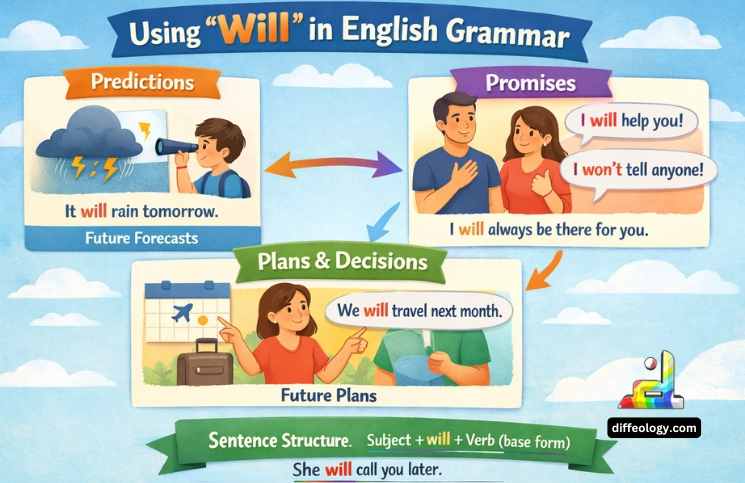
Will is the common helping verb for the future. You can use will with any subject. For example you can say I will call, she will come, or they will decide. Will also shows a promise or a strong decision. When someone says I will do it they mean they plan to do it and they are sure.
Read Also: Difference Between Loose and Lose
Because will is simple and clear, most people use it in speech and writing. It works in reports, emails, and everyday talk. Teachers usually teach first because it is easy to use and understood by most speakers around the world.
Comparison Table “Shall Vs. Will”
| Tone | Formal; polite | Neutral; common |
| Typical subjects | I; we | All subjects |
| Main uses | Offers; formal rules | Future facts; promises |
| Frequency | Less used | More used |
Difference Between Shall and Will in Detail
Get to know the Difference Between Shall Vs. Will in Detail.
1. Use with Subjects
Shall is often used with I and we when making offers or suggestions. Saying Shall I open the window is a polite way to offer help. Will works with all subjects and is the normal choice for future statements. You can say He will arrive soon or We will finish the work. For learners, will is safer unless you want a formal tone.
Shall with other subjects can sound formal or old-fashioned. Will with I or we is the usual modern form and sounds natural.
2. Tone and Formality
Shall gives a formal or polite tone. It appears in invitations and in some formal writing. Saying Shall we begin sounds polite and careful. Will gives a neutral and natural tone. Saying We will begin sounds direct and normal. Most spoken English uses will because it feels natural.
In legal texts shall sound strict. In daily life will keeps the message simple and clear.
3. Offers and Suggestions
Use shall to make an offer or suggestion with I or we. For example Shall I help you invites a yes or no answer. This use is common in polite speech. Use will to state a promise or a plan. For example I will help you shows a promise. This use is common in both speech and writing.
Offers with shall often invite a choice. Promises with will show intent and commitment.
4. Obligation and Rules
In some legal or formal texts shall is used to show obligation. A rule may say The user shall pay the fee to mean the user must pay. This use can be confusing. Many modern writers prefer must or will to show obligation. Saying The user must pay the fee is clearer for most readers.
If you write rules or contracts use words that leave no doubt. Shall can be read in different ways, so many experts avoid it.
5. Frequency of Use
Will is used far more in everyday English. Most speakers choose will for future statements. Shall is less common and often sounds formal or old fashioned. Language studies and tools like corpus analysis and text corpora show that will appears much more in modern texts and speech. For learners, using will is usually the safest choice.
If you read newspapers, emails, or listen to conversations you will see will most of the time.
6. Regional Differences
British English still teaches the traditional uses of shall more than other varieties. In some British contexts shall is used for polite offers. Other English varieties such as American English favor will in almost all cases. This makes will the more global choice.
When you speak to an international audience use will to avoid sounding too formal or old fashioned.
7. Strength and Meaning
Shall can sound tentative or polite in offers. It can also sound formal in rules. It rarely shows strong personal will. Will can show strong intent or determination. Saying I will finish this shows a firm decision. Will is the better choice when you want to show promise or resolve.
For clear promises and plans use will. For polite offers or formal rules consider shall only when the tone fits.
Key Difference Between Shall and Will
Here are the key points showing the Difference Between Shall Vs. Will.
- Formality Shall sounds formal; Will sounds normal.
- Subjects Shall often with I and we; Will with any subject.
- Offers Use shall for polite offers; use will for promises.
- Promises Will shows a promise or strong intent.
- Legal use Shall appears in laws but can be unclear.
- Clarity Will is clearer for most readers and listeners.
- Frequency People use will much more than shall in speech.
- Teaching Teachers usually teach will first to learners.
- Regional use British English keeps shall more than other varieties.
- Tone Shall is polite; Will is direct.
- Questions “Shall we?” invites action; “Will we?” asks about future fact.
- Commands Use must or will for clear commands instead of shall.
- Practice Read modern texts and you will see will more often.
- Safety When in doubt use
FAQs: Shall Vs. Will
Conclusion
Knowing the difference between shall and will helps you pick the right tone and meaning so your offers, promises, and rules sound natural and clear.
References & External Links
- 50 Sentences using SHALL in English
- Sentences Using ‘WILL’, WILL in Example Sentences

