

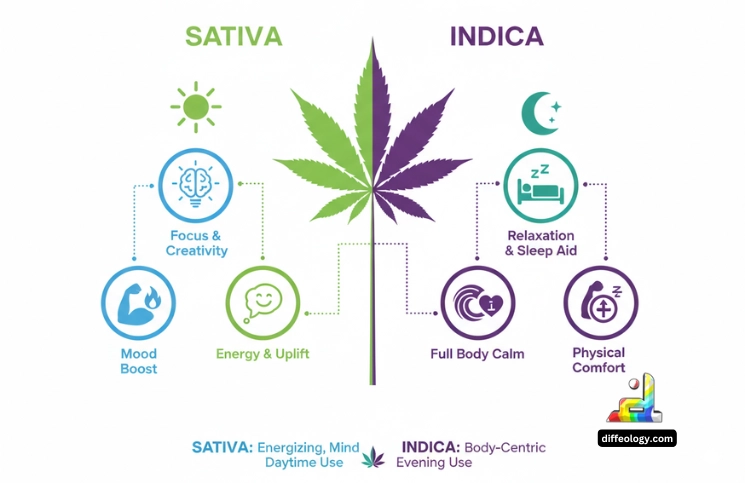
Do you know the Difference Between Sativa and Indica? Among the most often searched subjects by individuals looking for basic information about marijuana plants is the distinction between Sativa and Indica.Worldwide, more than 200 million people use marijuana in several ways. Sativa and Indica are two main categories of cannabis plants. These plants vary in shape, size, chemical makeup, and growing season.
Researchers have discovered that cannabinoids, over 100 natural molecules, exist in cannabis plants.THC and CBD are the most well-known ones. Typically, Indica strains have roughly 12–20% THC; sativa strains have roughly 15–25% THC. While Indica plants are significantly shorter and usually measure only 3–6 feet, Sativa plants can grow quite tall—sometimes up to 20 feet. Farmers today grow both kinds in several nations using contemporary techniques like Indoor Growing Technology, LED Grow Lights, Hydroponic Systems, and Climate Control Technology.
Knowing these distinctions lets individuals pick the ideal plant depending on space, time, and personal comfort.
Main Difference Between Sativa and Indica
Sativa and Indica vary mostly in their plant form, rate of growth, chemical content, and historical usage duration.Usually taking 10–16 weeks to grow, sativa plants are tall and thin. Typically ready in 8 to 10 weeks, Indica plants are small, broad, and grow quickly. Usually with more THC and lower CBD, sativa strains can have THC levels up to 25%. Indica strains sometimes provide a better ratio of THC to CBD, and some strains may reach 10% CBD.
Given these distinctions, Indica is often related with rest and evening use while Sativa is more usually associated with active daytime use. Cannabis Lab Testing, Gas Chromatography Technology, and Liquid Chromatography Systems are today used to quantify these variations.
Sativa Vs. Indica
What is Sativa

Originally found in hot and sunny locations near the equator, sativa is a kind of cannabis plant. These regions cover regions of Africa, Southeast Asia, and Central America. Sativa plants are distinguished by their thin shape and great height.Grown outside, they can reach heights between 12 and 20 feet. Long, narrow leaves found on Sativa plants help them in less water loss in warm weather. Most Sativa kinds have 15–25% THC, which explains why they are frequently connected with alert and energetic sensations.Sativa plants are often raised outside or in big inside settings with greenhouse technology, automated lighting systems, and Environmental Control Units since they grow tall and need more time.
Main features of Sativa plants include:
- Tall height, often above 12 feet
- Long and thin leaves
- Flowering time of 10–16 weeks
- THC levels usually above 15%
- Best growth in warm climates
Read Also: Difference Between Medicare and Medical
Many individuals pick Sativa strains by day. Surveys reveal that around 60% of users choose Sativa-like strains for daytime activities. Growing Sativa has gotten easier and more regulated with tools like Smart Irrigation Systems, Soil Moisture Sensors, and Digital Grow Timers.
What is Indica

Another major kind of cannabis plant that evolved in cold and mountainous areas, such the Hindu Kush, is indica. Normally reaching 3 to 6 feet tall, indica plants are short and bushy. Broad, thick leaves enable them to preserve energy in cooler temperatures. Typically faster than Sativa plants, indica plants grow thick buds. Most Indica kinds have 12 to 20% THC; many of these also contain greater CBD levels, occasionally 5 to 10%.Indica plants are much sought after for indoor cultivation as they are tiny and grow rapidly.
Main features of Indica plants include:
- Short height, usually under 6 feet
- Wide and dark green leaves
- Flowering time of 8–10 weeks
- Dense and heavy buds
- Suitable for cooler climates
Read Also: Difference Between Signs and Symptoms
Research and user polls indicate that roughly 55% of individuals would choose Indica strains for evening or nighttime usage. Growers may easily control Indica plants using contemporary devices including Air Ventilation Systems, LED Grow Light Technology, Indoor Grow Tents, and Digital Temperature Controllers.
Comparison Table “Sativa Vs. Indica”
| Height | 12–20 feet | 3–6 feet |
| Flowering Time | 10–16 weeks | 8–10 weeks |
| THC Level | 15–25% | 12–20% |
| CBD Level | Low | Up to 10% |
| Climate | Warm | Cool |
| Growing Style | Outdoor | Indoor |
| Bud Type | Light | Dense |
Difference Between Sativa and Indica in Detail
Get to know the Difference Between Sativa Vs. Indica in Detail.
1. Plant Height and Structure
Sativa plants are tall and slim. When grown outdoors, they can reach heights of 12–20 feet. Their long structure helps them get more sunlight in hot regions.
Indica plants are short and wide. They usually grow between 3–6 feet. Their compact shape helps them survive strong winds and cold weather.
2. Leaf Shape and Size
Sativa leaves are long and thin. Some leaves can grow up to 10 inches in length. This shape helps reduce water loss.
Indica leaves are wide and thick. They are about 30–50% broader than Sativa leaves. This helps the plant store energy.
3. Growing and Flowering Time
Sativa plants take longer to grow and flower. Their flowering time is usually 10–16 weeks.
Indica plants grow faster and usually finish flowering in 8–10 weeks, which allows quicker harvests.
4. Chemical Levels
Sativa strains often contain THC levels between 15–25% and low CBD levels.
Indica strains usually contain THC between 12–20% and CBD levels that can reach 10%.
5. Traditional Time of Use
Sativa is often used during the daytime. Around 60–65% of daytime users choose Sativa-type strains.
Indica is more often used in the evening or at night. About 50–55% of users prefer Indica during rest time.
6. Bud Density and Yield
Sativa buds are lighter and less dense. Outdoor plants can produce around 500–700 grams per plant.
Indica buds are dense and heavy. Indoor yields often reach 400–600 grams per square meter.
7. Climate Preference
Sativa grows best in warm areas with temperatures between 22–30°C.
Indica grows well in cooler areas and can handle temperatures around 15°C.
Key Difference Between Sativa and Indica
Here are the key points showing the Difference Between Sativa Vs. Indica.
- Height
Sativa grows tall above 12 feet, while Indica stays under 6 feet. - Plant Shape
Sativa is slim, and Indica is wide and bushy. - Leaf Type
Sativa has thin leaves, and Indica has broad leaves. - Growth Speed
Sativa grows slower, while Indica grows 2–6 weeks faster. - THC Content
Sativa often has THC above 15%. - CBD Content
Indica may have CBD levels up to 10%. - Climate
Sativa prefers warm climates, and Indica prefers cool climates. - Indoor Growing
Indica is easier to grow indoors due to size. - Outdoor Growing
Sativa grows better outdoors with open space. - Bud Density
Sativa buds are lighter, and Indica buds are dense. - Flowering Time
Sativa flowers in 10–16 weeks, and Indica in 8–10 weeks. - Traditional Use Time
Sativa is used more in the daytime, and Indica at night. - Origin
Sativa comes from hot regions, and Indica from mountains. - User Preference
Around 60% prefer Sativa for activity, and about 55% prefer Indica for rest.
FAQs: Sativa Vs. Indica
Conclusion
The Difference Between Sativa and Indica helps people understand plant size, growth time, chemical levels, and traditional use, making it easier to choose the right type based on space, time, and personal comfort.

