

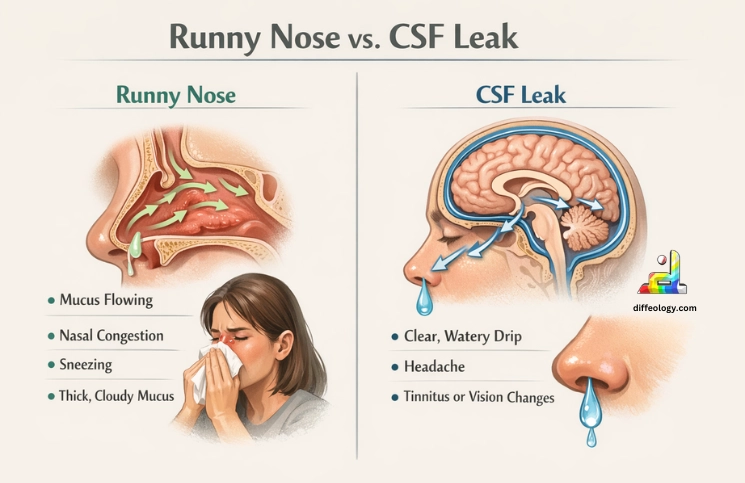
Difference between runny nose and csf leak is easy to see when you know what to look for. Fluid dripping from your nose often stems from irritated nasal tissue – it shows up now and then, no big deal. Brain-protecting liquid seeping out? That’s different – what happens if there’s a gap in the barrier, could turn risky. Normal drips tend to fade after about a week if you take it easy, drink fluids, maybe blow your nose gently. When spinal fluid leaks, you might notice constant wetness at one side of the nose, salt on your tongue, head pressure that ramps up when upright.
Experts check using specific lab work like beta-2 transferrin plus imaging: MRI, CT, sometimes and a special scan called cisternography – to locate trouble spots before guiding next steps.
Main Difference Between Runny Nose and CSF Leak
Apart from origin, risk level sets them apart. Nasal discharge stems from the inner nose wall when sickness or allergens strike, often harmless in nature. Cerebrospinal fluid escapes due to cracks in the skull floor or backbone, opening paths for microbes near brain tissue. Most sniffles fade within seven to ten days without help. Leaking spinal fluid persists unless sealed naturally or with treatment.
Runny Nose Vs. CSF Leak
What is Runny Nose

Fluid dripping from your nostrils comes from increased mucus production. Irritation inside the nasal passage often follows exposure to viruses, influenza, or things like grass dust. Sneezing shows up alongside stuffiness and slight discomfort when swallowing.
Read Also: Difference Between Need and Want
Recovery typically unfolds within seven to ten days through sleep, drinking fluids, and basic symptom relief options. A shift in mucus shade, or symptoms sticking around past two weeks, might prompt a visit to see if bacteria are involved. Relief often comes from store-bought remedies, hot fluids, along with inhaling moist air. Yet comfort tends to arrive quicker when these steps blend into daily routine.
What is CSF Leak
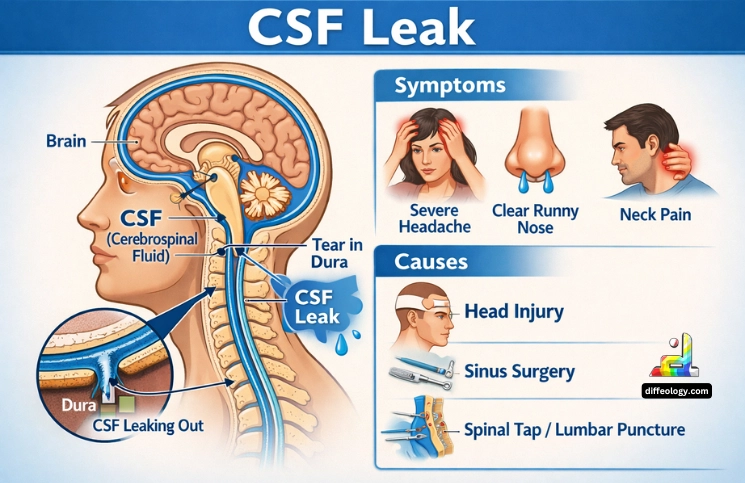
Fluid protecting your brain and spine escaping? That’s what happens during a CSF leak. A weak spot forms in the skull or along the backbone, letting liquid slip out. Trauma might cause it. So could an operation. Sometimes, though, nothing obvious triggers it at all. You might notice constant dripping from one side of the nose. Or detect something briny on your tongue.
Read Also: Difference Between Loose and Lose
Standing often brings on pain above the eyes – worse than when sitting. Testing checks if the runoff contains a specific protein: beta-2 transferrin. Imaging tools such as MRI or CT help locate trouble zones. Time and bed rest fix minor cases. More stubborn ones require draining fluid from the lower back – or sealing the gap through surgery.
Comparison Table “Runny Nose Vs. CSF Leak”
| Usual Cause | Viruses; allergies | Dura tear; trauma |
| Side | Both | Often one |
| Fluid Type | Thicker mucus | Thin spinal fluid |
| Key Tests | None usually | Beta-2 transferrin; CT; MRI |
| Urgency | Low | High |
Detailed Difference Between Runny Nose and CSF Leak
Get to know the Difference Between Runny Nose Vs. CSF Leak in Detail.
Cause and Origin
A drip from your nose begins when the inner tissue ramps up fluid production. That surge often kicks in during battles against viruses, exposure to plant bits floating in air, or contact with irritating substances. Mucus acts like a net, catching bugs and particles before they reach sensitive lung areas. When clear liquid drains steadily, one possible reason could be damage to the barriers holding spinal fluid near nerves of the head or back. Cerebrospinal fluid can leak out through the nose or ear. Sometimes, an injury leads to it – other times, it follows surgery. A thin area in the bottom of the skull might also allow the escape.
How the fluid looks and feels
Fluid from a runny nose usually gets thicker when an infection shows up, shifting from clear to yellowish or green. Sneezing pops up alongside a stuffy feeling inside the nostrils. That goop clings, gumming things up so air moves slower through your face holes. On another note, what leaks out during a CSF incident runs thin – more like water than slime. Some folks notice a sharp saltiness on their tongue when it drips. A single nostril tends to leak slowly, never both together. Rising from a seat could make it flow faster. Sometimes leaning over sets it going again.
Side Affected and Pattern
Nose drainage tends to show up in either passage, shifting back and forth without warning. Some hours it fades, then returns later, especially after dark or once you’re horizontal. When allergies jump in, both passages flood, sparking frequent bursts of sneezing. Fluid from around the brain, though, picks one side – steady, unchanging, dripping like clockwork. Water trickling from just one side often shows up more when moving upright. Leaning forward could make it seep faster, which helps doctors recognize it.
Headache and other Symptoms
A drip from the nose might bring slight head pain or a heavy feeling across the forehead, yet it rarely turns intense. A raised temperature or painful throat shows up sometimes during a common cold. Day-to-day activities stay possible for many, even if energy feels low. Leaking spinal fluid tends to trigger a pounding headache – worse on your feet, easier when flat. Dizziness sometimes shows up alongside stiff necks or shifts in how sounds are heard or what’s seen. When the cushioning liquid around the brain drops, those effects begin to appear.
Risk of Infection and Urgency
Most times, a drippy nose clears up without trouble. Home treatment works well – plenty of rest helps, drinking water matters too. Serious issues do not happen often. When spinal fluid leaks, danger grows. That’s because the shield guarding the brain weakens. Seeing a physician becomes pressing then. Testing may include scans – CT or MRI show what is going on inside. Beta-2 transferrin checks confirm if fluid is leaking. Acting fast cuts down infection odds.
Tests and How Doctors Check
A stuffy nose? Most times, physicians just watch how things go without running extra exams. Should signs drag on or intensify, closer attention might follow. A quick review plus past health notes generally covers it. Now, when spinal fluid leaks out, they analyze the drip – beta-2 transferrin acts like a fingerprint proving its origin. Scans such as MRI, CT, or CT cisternography often reveal where fluid is escaping. When surgery’s on the table, these images guide the way forward.
Treatment and Recovery
Healing begins when you slow down. A stuffy nose clears up with water, sleep, hot showers, sometimes pills from the drugstore. Around one week passes before most feel normal again. Just staying home helps more than expected. For spinal fluid leaks, doctors first suggest bed rest and keeping your back level. Some cases get worse even then. Tubes that redirect fluid offer relief for certain patients. Others must have an operation to seal the tear deep inside. A small fix can block germs from entering, giving the body a better shot at healing. To find the exact spot, scans like CT or MRI might light the way.
Key Difference Between Runny Nose and CSF Leak
Here are the key points showing the Difference Between Runny Nose Vs. CSF Leak.
- Cause: Runny nose = virus or allergy; CSF leak = tear in dura or skull base. A runny nose is a reaction; a CSF leak is a physical hole.
- Side: Runny nose = often both; CSF leak = often one One-sided watery drip is a warning sign.
- Fluid: Runny nose = thicker mucus; CSF leak = thin, watery, salty. Taste and thinness help tell them apart.
- Duration: Runny nose = 7–10 days usually; CSF leak = lasts until fixed. A runny nose often ends on its own; a leak usually needs care.
- Headache: Runny nose = mild; CSF leak = worse when standing. Positional headache is common with CSF leak.
- Smell/taste: Runny nose = reduced smell; CSF leak = salty taste possible. A salty taste with a watery drip is suspicious.
- Infection risk: Runny nose = low; CSF leak = higher risk of meningitis. A CSF leak opens a path for germs to reach the brain.
- Tests: Runny nose = none usually; CSF leak = beta-2 transferrin, CT, MRI. Special tests confirm spinal fluid.
- Treatment: Runny nose = home care; CSF leak = medical or surgical repair. Surgery may be needed to close the leak.
- Onset: Runny nose = gradual with cold; CSF leak = may follow trauma or surgery. A recent head injury raises concern for CSF leak.
- Age: Runny nose = all ages; CSF leak = more often adults after injury. Children get runny noses often; leaks are less common.
- Urgency: Runny nose = low; CSF leak = urgent evaluation. A leak needs quick medical attention.
- Nasal exam: Runny nose = inflamed mucosa; CSF leak = clear rhinorrhea without congestion. The nose may look normal with a CSF leak.
- Outcome: Runny nose = full recovery; CSF leak = needs repair to prevent complications. Fixing the leak prevents serious infections.
FAQs: Runny Nose Vs. CSF Leak
Conclusion
Difference between runny nose and csf leak matters because one is common and short while the other is rare and can be serious; if nasal drainage is one-sided, watery, and tied to strong positional headaches, get medical help right away.
References & External Links
- How to Stop a Runny Nose: Home Remedies for Viruses vs. Allergies
- Cerebrospinal Fluid (CSF) Leak: Symptoms, Types & Treatment

