

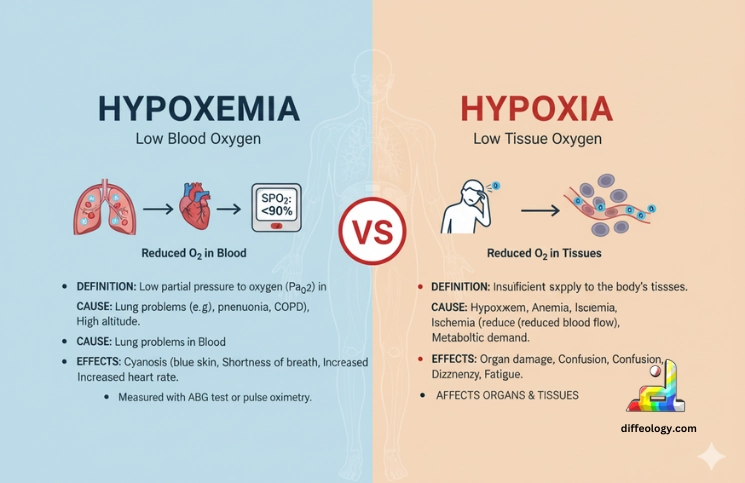
Difference between hypoxia and hypoxemia. This is basic information that clarifies the oxygen dilemma and the method to rectify it. Hypoxia is a medical term that indicates that the tissues in the body are not receiving enough oxygen to function properly. Hypoxemia is the condition when the amount of oxygen in the blood is less than the normal one.
Most of the time, a Pulse oximeter shows oxygen saturation within the range of 95%, 100%, and values that are less than 90% are usually associated with hypoxemia. Doctors confirm this with Arterial blood gas (ABG), where PaO2 under 80 mmHg is low and under 60 mmHg is often serious. At high altitudes above 8,000 feet, lower air pressure can drop blood oxygen and cause symptoms like headache and dizziness.
The brain is very sensitive to low oxygen; serious injury can begin in about 4 minutes if oxygen is extremely low. To help, teams use tools like Nasal cannula, Oxygen mask, High-flow nasal cannula, Noninvasive ventilation (BiPAP/CPAP), Ventilator, and in extreme cases ECMO. They also use tests like ECG, CT scan, MRI, and Capnography to find the cause and guide care. Simple ideas guide action: spot the drop early, raise oxygen safely, and fix the root problem fast.
Main Difference Between Hypoxia and Hypoxemia
The primary variation is location. Measurement of low blood oxygen, called hypoxemia, is done using an Arterial blood gas (ABG) (PaO2) or a Pulse oximeter (SpO2). Low tissue oxygen causes hypoxia; it might be brought on by hypoxemia, inadequate blood flow, or cells failing to consume oxygen effectively. Hypoxemia is usually indicated by an SpO2 under 90%. Below 80 mmHg, the PaO2 is poor; below 60 mmHg is frequently critical.
Hypoxia is seen in symptoms including perplexity, bluish lips, chest discomfort, or reduced urine output. Normal SpO2 does not mean a person is free from hypoxia should carbon monoxide impede oxygen consumption or if blood flow is inadequate. Hypoxemia is mostly about blood oxygen; hypoxia concerns the supply and utilization of oxygen by tissues.
Hypoxia Vs. Hypoxemia
What is Hypoxia
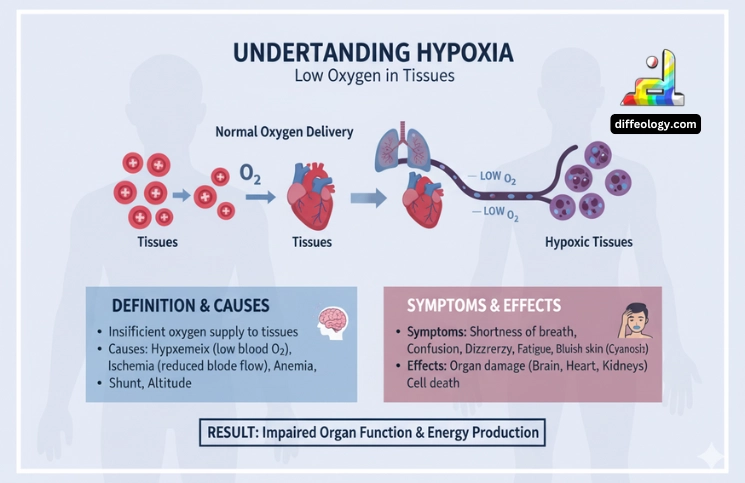
Hypoxia refers to the lack of oxygen your tissues have for their activities. It might impact one region, such a limb with a blocked artery, or the whole body. Low blood flow, weak cardiac pumping, lung disorders limiting oxygen distribution, anemia reducing oxygen carrying, or toxins preventing cells from utilizing oxygen are among causes. The lower pressure at high elevations over 8,000 feet can cause difficulties in obtaining oxygen to tissues, which can result in headache, weariness, and shortness of breath.
Low oxygen affects the brain fastest among organs. In around 4 minutes, sharp declines can begin to destroy it. Fast breathing, rapid heart rate, confusion, blue fingers or lips, and difficulty thinking are basic symptoms of hypoxia.
Read Also: Difference Between Left and Right Brain
Fluids or medications may assist the heart pump better if there is little blood flow. High oxygen speeds the clearance of carbon monoxide if that’s the problem. Doctors might open a vessel to restore flow if it is obstructed. As a last resort to add oxygen outside the body and give time to heal, ECMO can be employed when lungs and heart are unable to exchange enough oxygen notwithstanding other measures. To confirm that tissues are actually receiving oxygen, doctors monitor mental condition, urine output, skin temperature, and lab results in addition to just one number.
What is Hypoxemia
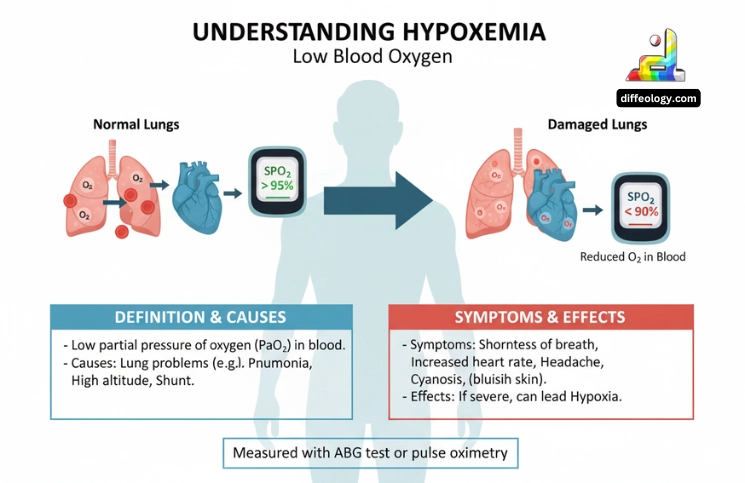
Hypoxemia is low blood oxygen. Normal readings range between 95% and 100%; values below 90% usually call for care; normally observed with a Pulse oximeter on your finger.
Unsolved hypoxemia can cause hypoxia as the blood cannot provide the tissues with enough oxygen. Among the signs are disorientation, headache, rapid breathing, difficulty breathing, bluish lips or skin. Treatment starts with oxygen help. Using an oxygen mask or nasal cannula will assist to quickly raise oxygen levels.
Read Also: Difference Between Heart Attack and Cardiac Arrest
A ventilator supports or replaces breathing in severe situations; otherwise, doctors also address the underlying cause—such as antibiotics for pneumonia, steroids or bronchodilators for asthma or COPD, or blood thinners for clots—to bring SpO2 into safer levels between 92% and 96% and stabilize breathing and cardiac performance. High flow nasal cannula is used when more assistance is required. Noninvasive ventilation (BiPAP/CPAP) helps when breathing muscles are weak or airways are collapsing.
Comparison Table “Hypoxia Vs. Hypoxemia”
| What it is | Low oxygen in blood (SpO2 < 90%, PaO2 < 80 mmHg) | Low oxygen in tissues (organ signs like confusion, bluish lips, low urine) |
| Where it starts | Lungs and blood | Organs and cells |
| How it’s measured | Pulse oximeter, Arterial blood gas (ABG) | Symptoms, organ checks, ECG, CT scan, MRI |
| Common causes | Pneumonia, COPD, asthma, altitude > 8,000 feet | Shock, heart failure, toxins, blocked vessels, anemia |
| First-line support | Nasal cannula, Oxygen mask | Oxygen support plus blood flow and cause-focused care |
| Advanced support | High-flow nasal cannula, Noninvasive ventilation (BiPAP/CPAP), Ventilator, ECMO | Same tools plus heart and circulation support |
Difference Between Hypoxia and Hypoxemia in Detail
Get to know the Difference Between Hypoxia Vs. Hypoxemia in Detail.
Where the Problem Starts in the Body
Blood and lungs both develop hypoxemia. Because oxygen struggles to move from air into the circulation, SpO2 dips below 90% and PaO2 could dip below 80 mmHg. Tissues that depend on oxygen are the first ones to show hypoxia. Normal SpO2 does not guarantee that tissues will correctly utilize or absorb oxygen if blood flow is poor or poisons block utilization.
Fixing blood flow, heart pumping, or toxins is vital for hypoxia; hence, this is important. On the other hand, mending the lungs will enable hypoxemia by addressing underlying causes. Hypoxemia may affect a patient at heights above 8,000 feet. A patient with a blocked leg artery could have localized hypoxia even if SpO2 is 97%.
How to Check and Measure
Arterial blood gas (ABG) and a Pulse oximeter both help to diagnose hypoxemia. Normal values for healthy individuals range from 95% to 100%; anything less than 90% usually raises cause for worry. Low is PaO2 below 80 mmHg; generally severe is below 60 mmHg. There is no one number for hypoxia. Doctors check for things like being confused, having blue lips, cold skin, not enough urine, and if your organs are working properly.
Teams employ ECG for heart stress, CT scan for lung issues like pneumonia or clots, MRI for brain injury, and Capnography to monitor carbon dioxide and ventilation in order to verify causes. These techniques guide treatment and aid in connecting the low oxygen to the appropriate source.
What Causes Them
Hypoxemia can result from lung issues including pneumonia, COPD, asthma, fluid buildup, or clots. Sedation and weak respiratory effort can also help to reduce oxygen further. Rising more than 8,000 feet lowers oxygen pressure and could cause hypoxemia. During hypoxia, tissues cannot get or use oxygen; shock lowers blood flow; heart failure lowers output; anemia lowers oxygen carrying; and pollutants such as carbon monoxide block use.
The first line of defense for hypoxemia is to increase gas exchange in the lungs. In hypoxia, the first stage is to improve delivery and use in tissues. Like severe pneumonia generating hypoxemia followed by full body hypoxia, someone may have both at once.
What You Feel and What Organs Show
Hypoxemia often feels like shortness of breath, fast breathing, headache, and sometimes confusion. A Pulse oximeter may read 88%–90%. Hypoxia often shows with confusion, agitation, bluish lips, chest pain, and low urine output. The brain can begin to suffer in about 4 minutes during extreme lack of oxygen. The heart may show rhythm changes or pain.
Tissue hypoxia harms organs at different speeds. Brain injury risk rises fastest, kidneys soon after, then muscles and skin. Longer hypoxemia under 90% increases risk. Early action keeps tissues safer and reduces compounding harm.
How We Treat and Support
Hypoxemia is treated by increasing oxygen in the blood and fixing lung causes. Nasal cannula, Oxygen mask, High-flow nasal cannula, and Noninvasive ventilation (BiPAP/CPAP) are common steps. A Ventilator is used if SpO2 stays under 90% despite support or if breathing muscles fail. Doctors also use blood thinners to treat clots, antibiotics to treat pneumonia, and steroids and bronchodilators to treat asthma.
Treatment of hypoxia consists of enhancing tissue oxygen supply. Doctors treat toxins, fix clogged vessels, boost blood flow, and control blood pressure. If the heart isn’t working right, they might take medicines to make it pump better. If the lungs and heart cannot satisfy oxygen requirements even with other support, ECMO can provide outside oxygen and allow time to treat the underlying cause.
How We Track and Establish Objectives
Teams monitor ABG and SpO2 in hypoxemia. Good targets are usually PaO2 above 80 mmHg and SpO2 around 92%–96%. To determine ventilation, monitoring employs a Pulse oximeter, Arterial blood gas (ABG), and occasionally Capnography. Teams in hypoxia monitor organ indicators including stable heart rhythm on ECG, warm skin, adequate urine output, and normal thinking.
As patients improve, support is adjusted. If SpO2 rises from 85% to 93% on High-flow nasal cannula, teams may step down to a Nasal cannula. If confusion fades and urine output rises, tissues are getting better oxygen, showing hypoxia is improving as well.
What Happens If We Do Not Act and What Helps Outcomes
Unprocessed hypoxemia might result in hypoxia and organ malfunction. Extended stretches below 90% SpO2 increase the likelihood of problems. Four minutes of extreme shortage of oxygen can lead to brain damage, followed quickly by heart rhythm problems. Recovery relies on the degree of decrease in levels as well as the speed of support initiation.
Prompt attention improves results. Good equipment, including High flow nasal cannula, Noninvasive breathing (BiPAP/CPAP), ventilator, and, on quite rare occasions, ECMO, can help deliver oxygen and buy time. Preventive measures like infections, clots, and fluid build-up help to reduce risk. Those going above 8,000 feet should rest, go slowly, and watch for any signals.
Key Difference Between Hypoxia and Hypoxemia
Here are the key points showing the Difference Between Need Vs. Want.
- Hypoxemia is low oxygen in blood; hypoxia is low oxygen in tissues. SpO2 below 90% often means hypoxemia.
- Hypoxemia is measured by Pulse oximeter and Arterial blood gas (ABG); hypoxia is seen in organ signs.
- Hypoxemia starts in lungs and blood; hypoxia shows in the brain, heart, kidneys, and muscles.
- Hypoxemia symptoms include shortness of breath and headache; hypoxia symptoms include confusion and bluish lips.
- Hypoxemia often comes from pneumonia, COPD, asthma, or altitude above 8,000 feet; hypoxia can come from shock, heart failure, anemia, or toxins.
- Severe hypoxia can begin harming the brain in about 4 minutes; hypoxemia risk rises as SpO2 stays under 90%.
- ABG PaO2 under 80 mmHg is low and under 60 mmHg is often serious; hypoxia has no single number.
- Hypoxemia is treated first with Nasal cannula and Oxygen mask; hypoxia may need blood flow support and toxin treatment.
- High-flow nasal cannula and Noninvasive ventilation (BiPAP/CPAP) help hypoxemia; severe cases may need Ventilator or ECMO.
- Hypoxemia can lead to hypoxia; hypoxia can exist without hypoxemia in carbon monoxide exposure.
- Hypoxemia is tracked by SpO2 and ABG; hypoxia is tracked by organ signs and ECG
- Hypoxemia targets often include SpO2 around 92%–96%; hypoxia targets include normal thinking and good urine output.
- Hypoxemia focuses on lung gas exchange; hypoxia focuses on oxygen delivery and use in tissues.
- Fixing hypoxemia early can prevent hypoxia; fixing hypoxia protects organs and lowers future problems.
FAQs: Hypoxia Vs. Hypoxemia
Conclusion
Understanding whether low oxygen starts in blood or in tissues will help you make wise decisions to safeguard organs and save time. Shooting for SpO2 between 92% and 96%, monitoring organ signals, and early intervention helps to reduce damage and quicken recovery. Ultimately, the difference between hypoxia and hypoxemia guides the selection of appropriate actions at the appropriate moment.
References & External Links
- Hypoxia Causes, Symptoms, Tests, Diagnosis & Treatment
- Hypoxemia Causes, Symptoms, Diagnosis & Treatment

