

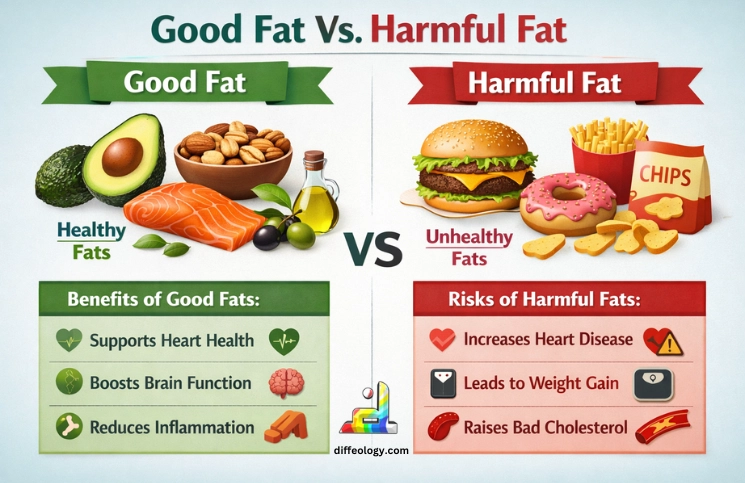
Difference between Good Fat and Harmful Fat is an important topic because fat is a key part of everyday food. Fat fuels more than just energy – experts at places like WHO suggest it covers 20 to 35 percent of what most people eat each day. Still, piling on fatty foods isn’t automatically good news for wellbeing. Certain kinds keep hearts steady, minds sharp, bodies balanced. Yet others creep through arteries, harming them over time, raising odds of severe health problems.
One study found that swapping bad fats for healthier ones cuts heart disease chances close to 30 percent. Fish, nuts, seeds, and oils from plants often bring those helpful fats into meals. Processed items, built with heavy manufacturing methods, tend to pack the kinds most likely to harm arteries. Tests tracking cholesterol shifts show clear differences when people change what they eat. Choices shaped by this knowledge support long-term wellness without relying on medical fixes.
Main Difference Between Good Fat and Harmful Fat
What sets good fat apart from bad lies in its effect on bodily functions. Instead of harming, it aids circulation while boosting mental sharpness and keeping cholesterol in check. Studies relying on detailed lipid testing reveal these fats lower unhealthy LDL particles by 10 to 15 percent, lifting protective HDL by up to a tenth. Bad versions work backward. Their presence pushes LDL higher – often past twenty percent – and encourages plaque formation within blood vessels. Fats that support health assist in vitamin uptake while delivering steady fuel through the day. Unhealthy kinds spark internal irritation, lead to added pounds, also boost chances of heart trouble, brain issues, or blood sugar problems.
Good Fat Vs. Harmful Fat
What is Good Fat
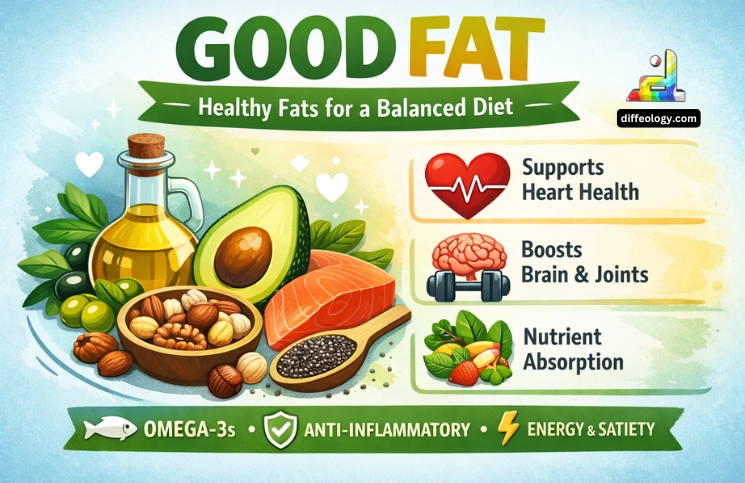
Healthy fats support how your body functions each day. Mostly these come from unsaturated sources you might already keep at home. Monounsaturated ones appear in avocados, while others pop up in sunflower oil or a handful of almonds. Fish delivers one kind; so do small seeds scattered on salads. Olive oil drizzled over vegetables counts too. Research following meals through digital tracking noticed something quiet but clear. Those choosing such fats often saw their chances of heart issues drop near one quarter. Found in salmon and sardines, Omega-3 stands out among healthy fats. Nearly cutting inflammation by a third, these fats also play a role in maintaining steady heart rhythms.
Read Also: Difference Between Lauric and Non Lauric Fats
Fats play a quiet role in how we absorb certain vitamins. Take vitamin A, D, E, or K – each relies on fat to move through the system. Most of their journey, about seven out of ten steps, needs fat nearby. When healthy fats are missing, those vitamins go partly unused. Fullness after eating often ties back to these helpful fats. Eating them can soften hunger signals later. Fats once feared now appear to curb hunger, cutting daily intake by roughly 300 calories according to digital food logs. Energy stays even, pounds stay off – simple math, real results.
What is Harmful Fat
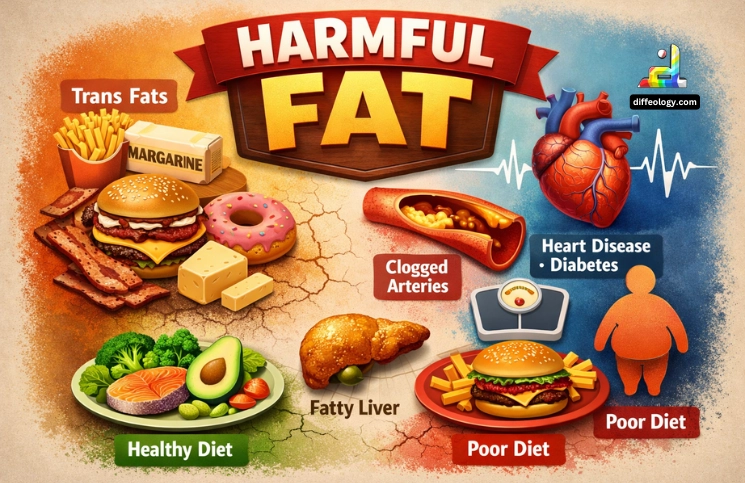
Fat that harms the body often comes in two types: trans and too much saturated fat. Slow harm builds up in arteries and heart tissue over time. Created through a process called hydrogenation, trans fats emerge from factory methods used on oils. Found commonly in fried dishes, store-bought pastries, some spreads like margarine, and ready-to-eat meals. A single bite loaded with trans fat might do harm. As little as two percent of your day’s energy from this substance ties to a 23% jump in heart trouble, scientists found while tracking hearts with special monitoring tools.
Read Also: Difference Between Heart Attack and Cardiac Arrest
Fats that stay solid at room temperature show up in foods like butter, creamy sauces, red meat cuts, along with cheese made from whole milk. Too many of these fats pushes bad cholesterol higher. Most doctors agree: fewer than one out of every ten daily energy units should come from them. Go past that point, and blood cholesterol climbs fast. These types pack extra energy while doing little to fill you up. Weight piles on when habits stay unchecked. Global records show over 650 million grown-ups carry excess body mass across the planet.
Comparison Table “Good Fat Vs. Harmful Fat”
| Type | Unsaturated fat | Trans and excess saturated fat |
| Cholesterol | Lowers LDL | Raises LDL |
| Heart Risk | Reduced by 30% | Increased by 23% |
| Brain Health | Supports memory | Slows thinking |
| Sources | Fish, nuts, oils | Fried and packaged foods |
| Inflammation | Reduced by 30% | Increased by 25% |
| Weight Effect | Controls hunger | Causes weight gain |
Detailed Difference Between Good Fat and Harmful Fat
Get to know the Difference Between Good Fat Vs. Harmful Fat in Detail.
1. Effect on Heart Health
Heart health gets a boost when good fats keep blood vessels limber, helping circulation along. Swapping bad fats for better ones slashes heart attack odds – imaging studies pin it at 20 to 30 percent less risk. Plaque inside arteries? It tends to slow its spread with the right fat choices.
Fat that harms your body can make blood vessels tighter and stiffer. Because of this change, movement of blood through them becomes slower, which pushes pressure up. Even tiny portions of trans fat lead to higher chances of problems with the heart.
2. Effect on Cholesterol Levels
Most healthy fats cut bad cholesterol close to 15%. Yet they also lift the good kind. This better type grabs surplus grease floating in blood. Then it shuttles it off toward the liver.
Fats that damage health push LDL up well past twenty percent while pulling down HDL at the same time. Because of this shift, fatty deposits linger in arteries much longer, making clogs more likely over time.
3. Role in Brain Health
Nearly sixty percent of your brain is fat. When you give it quality fats, messages between cells move quicker. Omega-3s play a part in sharpening recall and boosting how fast you pick up new things. Scans tracking mental performance reveal those eating proper fats face forty percent fewer issues keeping memories clear.
When bad fats build up, they can slow how much blood reaches the brain. Eating lots of trans fat may lead to slightly slower thoughts and less sharp attention.
4. Effect on Body Weight
Fullness comes easier with healthy fats since they delay stomach emptying. Because of this, fewer snacks tempt you throughout the day. Research recorded about 300 less calories eaten each day when these fats stay in meals. Digestion changes might be why weight stays more stable.
Empty calories pile up when bad fats slip into meals, yet they never quiet a growling stomach. Over months, eating them often might push body fat higher – somewhere between five and ten percent.
5. Effect on Inflammation
Fats that do good things inside the body can lower signs of swelling close to thirty percent. Protection for joints, along with muscle and internal parts, comes from this change.
Fats that damage the body push inflammation past a quarter higher, creating risks for ongoing illness.
6. Source and Processing
Fish, nuts, and avocados often hold the best kinds of fat. Freshness matters – these items typically stay close to how nature made them. Minimal steps after harvest mean fewer changes to what’s inside. Take olive oil: pressing it slowly without heat helps protect its core qualities. Without harsh treatments or extreme temperatures, the fats do not break down easily. Their structure stays firm, which supports how the body uses them.
Most unhealthy fats show up in ready-made meals and quick-service restaurant dishes shaped by intense factory methods. Take hydrogenation or frying at high temperatures – these twist fat molecules into something new. Nutrients that start out helpful get wiped out along the way, while strange substances appear instead. When people eat these modified fats regularly, their bodies struggle to handle them, quietly wearing down arteries over time.
7. Long-Term Health Impact
Over time, eating the right kinds of fat helps keep the body strong. Studies using ongoing health tracking found these fats lower type 2 diabetes chances by about one sixth to one fifth. Because they help the heart work well, minds stay sharp, and bodies age more smoothly. Those who include them daily tend to show healthier cholesterol levels. Living longer without constant illness could be tied to this habit.
Most bad fats make serious illnesses more likely. Research using broad health records finds eating lots of unhealthy fat types boosts chances of diabetes, heart trouble, or stroke past a third. These fats slowly trigger swelling inside the body, added pounds, clogged blood vessels – robbing years, dimming daily living. What sticks around harms what comes later.
Key Difference Between Good Fat and Harmful Fat
Here are the key points showing the Difference Between Good Fat Vs. Harmful Fat.
- Heart Health
Good fat supports heart function and lowers disease risk by 30%. Harmful fat increases heart problems. - Cholesterol Control
Good fat lowers LDL and raises HDL. Harmful fat raises LDL by 20%. - Brain Support
Good fat helps memory and learning. Harmful fat slows brain activity. - Inflammation
Good fat reduces inflammation by 30%. Harmful fat increases it by 25%. - Weight Control
Good fat helps manage hunger. Harmful fat causes weight gain. - Energy Levels
Good fat provides steady energy. Harmful fat causes energy crashes. - Food Sources
Good fat comes from natural foods. Harmful fat comes from processed foods. - Vitamin Use
Good fat helps absorb 4 vitamins. Harmful fat blocks absorption. - Blood Flow
Good fat improves circulation. Harmful fat restricts blood flow. - Diabetes Risk
Good fat lowers diabetes risk by 20%. Harmful fat raises risk. - Immune Support
Good fat supports immunity. Harmful fat weakens it. - Cooking Stability
Good fats stay stable at normal heat. Harmful fats break down easily. - Life Expectancy
Good fat supports longer life. Harmful fat shortens lifespan. - Daily Intake Safety
Good fat is safe in balance. Harmful fat should be limited.
FAQs: Good Fat Vs. Harmful Fat
Conclusion
Understanding the difference between Good Fat and Harmful Fat helps people choose foods that support the heart, brain, and long-term health. Good fats provide energy and protect the body, while harmful fats increase health risks when eaten often. Making better fat choices supports a healthier and more active life.
References & External Links
- Types of Fat • The Nutrition Source

